How Barcelona is reimagining the metropolitan city for all
iStockAcross the Metropolitan Area of Barcelona, a bold urban vision is reshaping how public space is conceived, built, and shared, placing social inclusion and metropolitan cohesion at its core. Spanning 636 km² and home to over 3.2 million people across 36 municipalities, the metropolitan government of Barcelona (AMB) is moving away from fragmented urbanism toward a compact, polycentric metropolis grounded in proximity, equity, and environmental stewardship.
Barcelona’s metropolitan area is turning once-divided landscapes into a shared space for all.
At the heart of this strategy is the idea of a “city of cities,” where people can access school, work, and leisure within a 15-minute walk or bike ride. This approach decentralizes urban life and strengthens social ties at the neighborhood level. In 2017, the Metropolitan Area of Barcelona emphasized a shift in thinking to privilege ecological corridors and social connections that bridge municipal boundaries, turning once-divided landscapes into a truly shared metropolitan space for all.
Ecological restoration at metropolitan scale
The Metropolitan Area of Barcelona is turning old barriers, like roads, industrial areas, and rivers, into new public and green spaces. Between 2015 and 2019, the AMB expanded its metropolitan park network from 40 to 51 parks across 33 municipalities. By fostering continuity and functional relationships across these areas, the metropolitan government makes it possible to create itineraries for walking and cycling. In recent years, this approach has materialized through a series of initiatives that knit together the green infrastructure network, including the greenways promoted by the Barcelonès County Council, the green ring of Sant Boi, and the distributed itineraries surrounding the Passeig de les Aigües in Collserola. These interconnected routes strengthen the metropolitan scope of public space by restoring natural areas that support biodiversity, while also turning green spaces into both destinations and active mobility corridors.
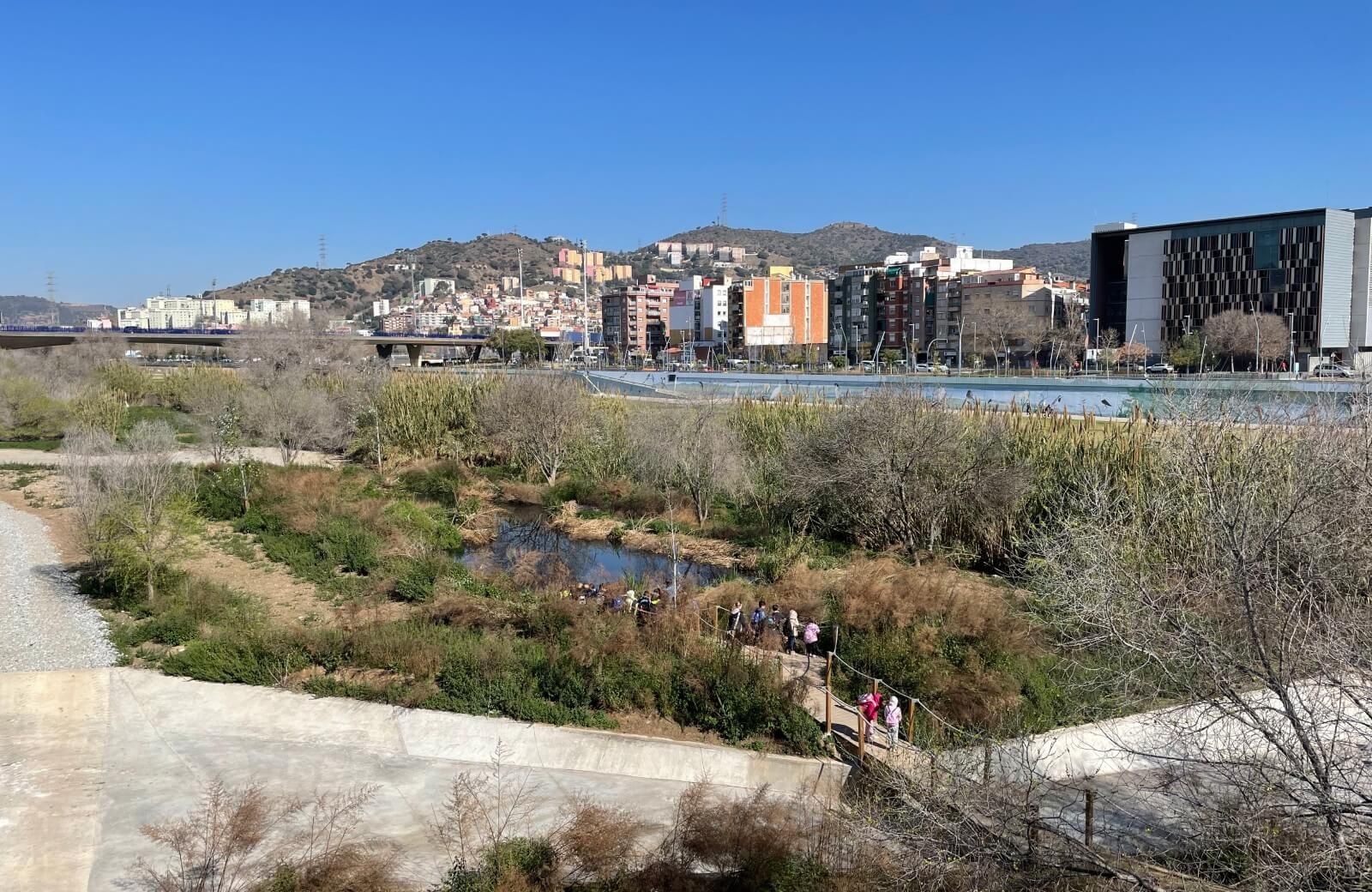
The Parc Fluvial del Besòs links several municipalities through leisure areas and restored natural habitats. Source: Metropolitan Area of Barcelona.
A flagship project in this vision is the renaturalization of the Besòs River, once one of Europe’s most polluted waterways. In 2024, the Metropolitan Area of Barcelona launched Phase 2 of its restoration, with a €6 million investment to improve biodiversity, build new walking and cycling paths, and connect municipalities. The project will enhance ecological continuity, create new pedestrian and cycling paths, and improve public access to the riverbanks. This builds on the earlier creation of the Parc Fluvial del Besòs—a 9 km linear park that links several municipalities through leisure areas and restored natural habitats.
The Metropolitan Area of Barcelona champions the transformation of neglected spaces into inclusive civic infrastructure.
Proximity in motion: connecting people and places
Barcelona’s mobility policies prioritize walking, cycling, and public transport over private cars. The 2019–2024 Urban Mobility Plan set out to change travel habits and promote sustainable mobility, prioritizing walking, cycling, and public transport through infrastructure that connects neighborhoods and municipalities. At its core is the principle of proximity: ensuring that people can reach daily destinations, such as work, schools, or leisure spaces, quickly and safely within their immediate environment.
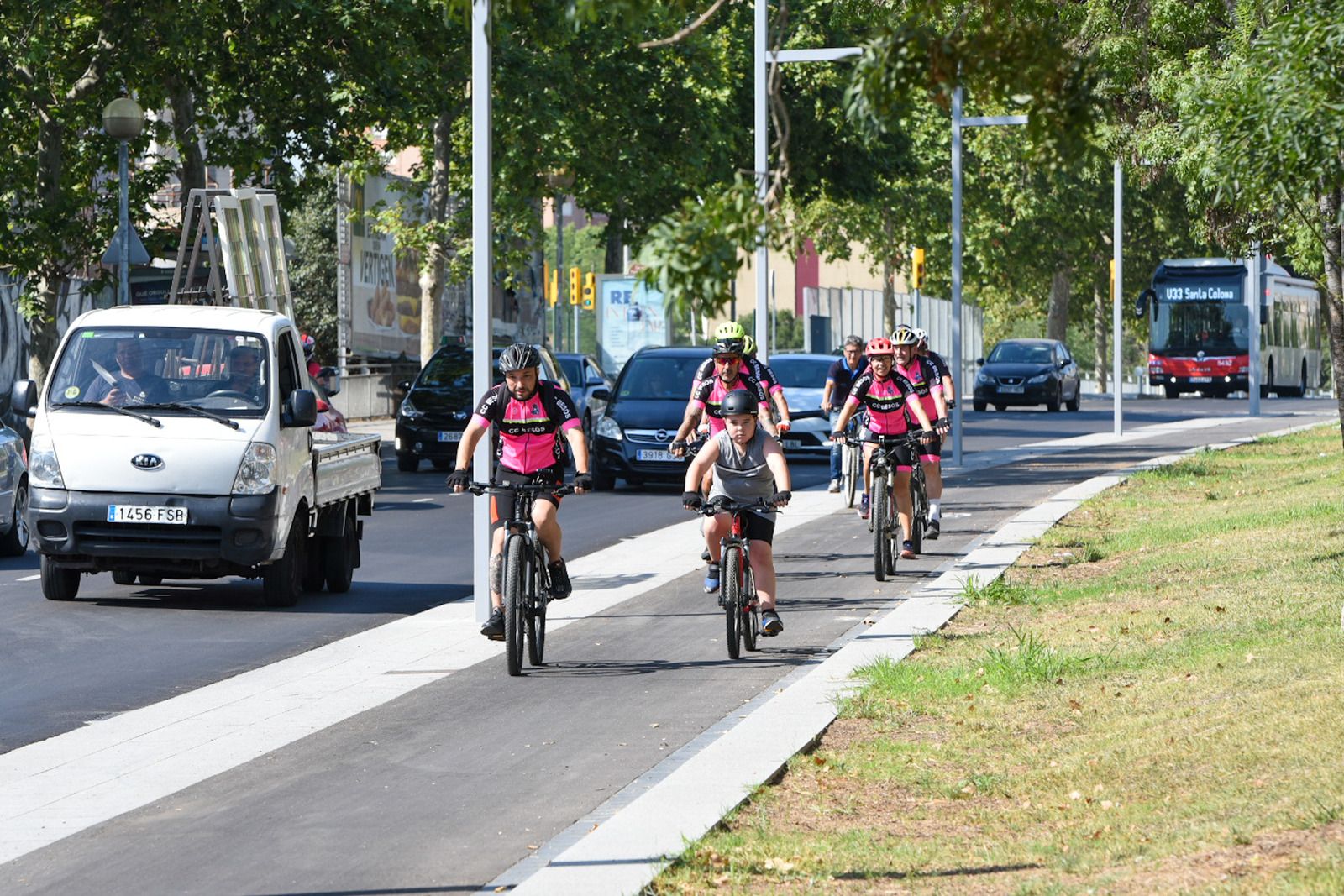
New bike lanes on streets and highways are creating a network that connects different municipalities across the metropolitan area. Source: Metropolitan Area of Barcelona
A central initiative is Bicivia, the strategic network of metropolitan cycling routes defined and designed by the AMB in collaboration with the 36 municipalities. The network aims to connect the metropolis by linking nodes of activity, economic hubs, and other major mobility generators located less than 8 km apart. Bicivia consists of a total of 414 km of planned cycle paths, organized into a basic and a secondary network. To date, the Metropolitan Area of Barcelona has built 262 km of Bicivia routes, along with 72 km of the complementary Ronda Verda.
Some examples include the 890-meter-long bike lane connecting Esplugues de Llobregat with Barcelona, which provides separate spaces for pedestrians and cyclists, and the 500-meter lane built at the entrance to the Passadors bridge in Sant Adrià de Besòs. This section is a strategic link for cycling mobility across the Barcelona metropolis and stands out as one of the main metropolitan connections, making cycling faster and safer across northern Barcelonès, Barcelona, and L’Hospitalet de Llobregat. The Metropolitan Area of Barcelona is also rolling out AMBici, a metropolitan-scale bike-sharing system that is expected to eventually complement Barcelona’s Bicing service.
At a larger scale, the C-245 urban integration and mobility improvement project is transforming a highway corridor into a people-centered street. The initiative includes a 13-kilometer dedicated bus lane linking Cornellà de Llobregat and Castelldefels, a Bus Rapid Transit service, and a new protected bike lane connecting five municipalities. To further promote public transport, the Metropolitan Area of Barcelona has introduced a metropolitan-scale park-and-ride network, allowing people to park their vehicles next to rail stations, tram stops, and key bus corridors, before continuing their journey by public transport.
Democratizing public space to strengthen community life
Barcelona’s metropolitan transformation also plays out in the heart of neighborhoods, where reclaiming streets and squares from private vehicles is helping democratize public space. An example is the redevelopment of Plaça Penedès in Cerdanyola del Vallès. What was once a shaded, overlooked gap between residential blocks has been reimagined as a welcoming square for neighbors to gather, interact, and share daily life. Enclosed on three sides by nine-story apartment buildings, the site has been transformed into a distinctive public landmark that fosters a stronger sense of belonging and community identity.
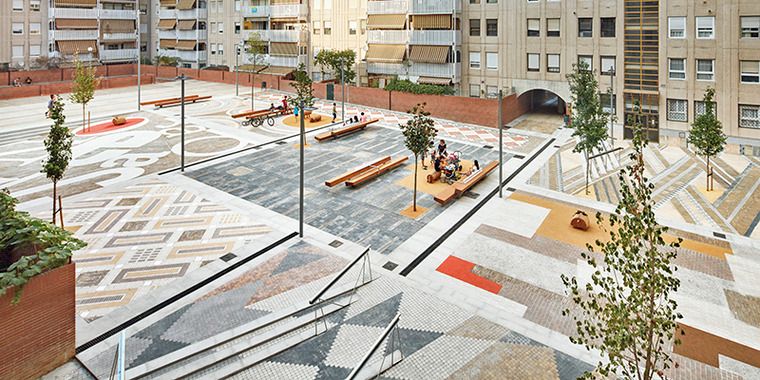
Through a series of urban interventions, the metropolitan government is revitalizing public space. Source: Metropolitan Area of Barcelona
In Cornellà de Llobregat, the transformation of Carretera d’Esplugues and the surrounding squares exemplifies how traffic-dominated areas can be reclaimed as civic spaces. By reducing car circulation and reorganizing key junctions, the project unified previously fragmented plazas around the Town Hall into a continuous civic axis at the heart of the city. The result is a more accessible, people-centered environment with shaded promenades, seating areas, and playgrounds, spaces designed to foster interaction and democratize public space for everyday life.
This vision extends beyond open space to include buildings and industrial sites. A compelling example is La Ciba, located in Santa Coloma de Gramenet. Formerly a textile factory, the site has been transformed into a center for resources, innovation, and the economy, with a strong focus on promoting women’s rights and inclusion. The metropolitan government intervened to reurbanize the surrounding public space, improving pedestrian connections and accessibility while integrating the building into the neighborhood’s civic life. Today, La Ciba is a vibrant hub for community programming, public services, and collective learning—embodying how vacant or underused structures can become new anchors of proximity, equality, and shared use.
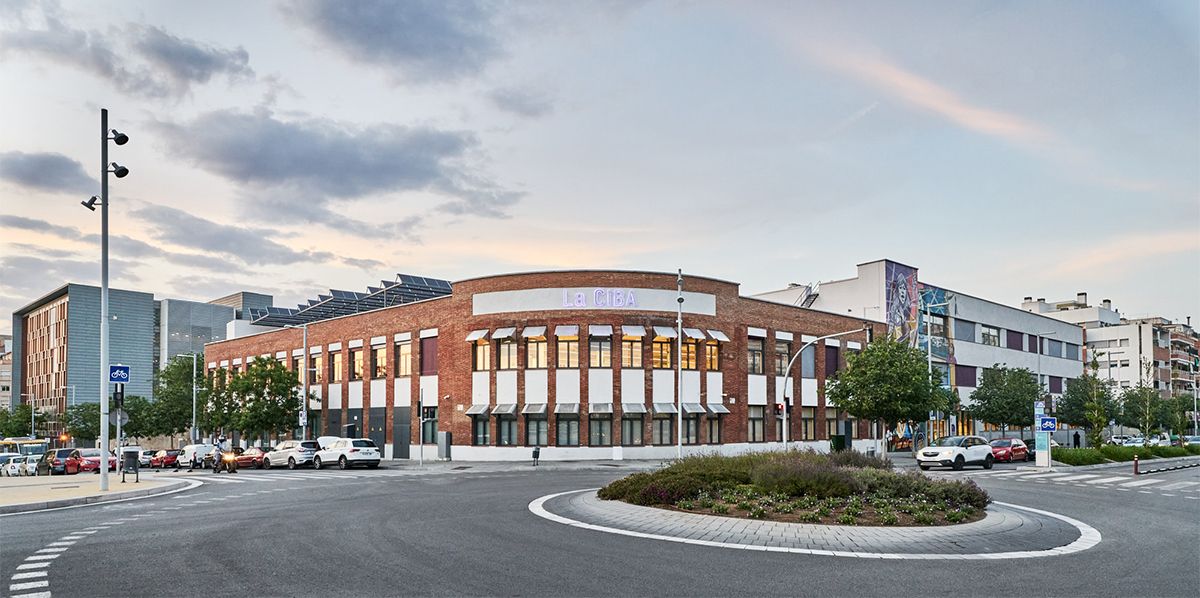
Formerly a factory, La Ciba has been transformed into a public center with a strong focus on women’s rights and inclusion. Source: Quim Bosch / AMB.
Barcelona’s metropolitan approach reclaims public space as a vehicle for inclusion, sustainability, and community well-being. Guided by a people-centered vision, the metropolis is transforming once-divided landscapes into shared spaces for all.
Discover more about the Metropolitan Area of Barcelona on Metro Futures