Mainstreaming futures in your city
Cities evolve every day, not only when formal plans are drafted. This section offers guidance on when, what, and how often to engage communities in futures activities during the strategic foresight process and between planning cycles.
During Cyclical Planning
Strategic foresight should inform and support your city’s regular strategic planning process. Each of the six steps in the strategic foresight process should be completed once each planning cycle. As a rule of thumb, start the strategic foresight process 8 months before your draft strategic plan needs to be submitted.
Budget one month for each of the six steps in the foresight process for engagement, workshopping and consolidation of results.
Between Planning Cycles
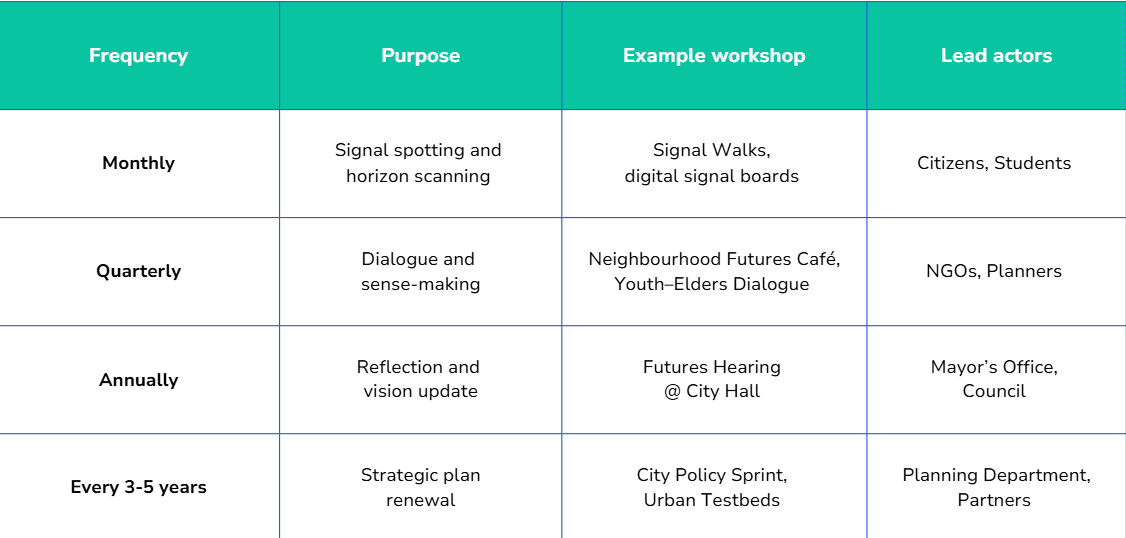
Between formal planning cycles, cities should sustain participation in foresight activities, including moments of reflection with the community. Cities will benefit from stronger insights drawn from frequent, light touch engagement, and can sustain participation over time through playful activities.
For instance, by using signal scanning or the futures artefact game city governments can prompt quick conversations about emerging trends. These short sessions keep horizon scanning social, creative, and routine, building a futures culture with all city stakeholders.
Suggested frequency of activities (see below for workshop guidance):